Category Archives: Academic papers

Reliability of Chip & PIN evidence in banking disputes

It has now been two weeks since we published our paper “Chip and PIN is broken”. Here, we presented the no-PIN attack, which allows criminals to use a stolen Chip and PIN card, without having to know its PIN. The paper has triggered a considerable amount of discussion, on Light Blue Touchpaper, Finextra, and elsewhere.

One of the topics which has come up is the effect of the no-PIN vulnerability on the consideration of evidence in disputed card transactions. Importantly, we showed that a merchant till-receipt which shows “PIN verified” cannot be relied upon, because this message will appear should the attack we presented be executed, even though the wrong PIN was entered.

On this point, the spokesperson for the banking trade body, the UK Cards Association (formerly known as APACS) stated:

“Finally the issuer would not review a suspected fraud involving a PIN and make a decision based on the customer’s paper receipt stating that the transaction was “PIN verified”, as suggested by Cambridge.”

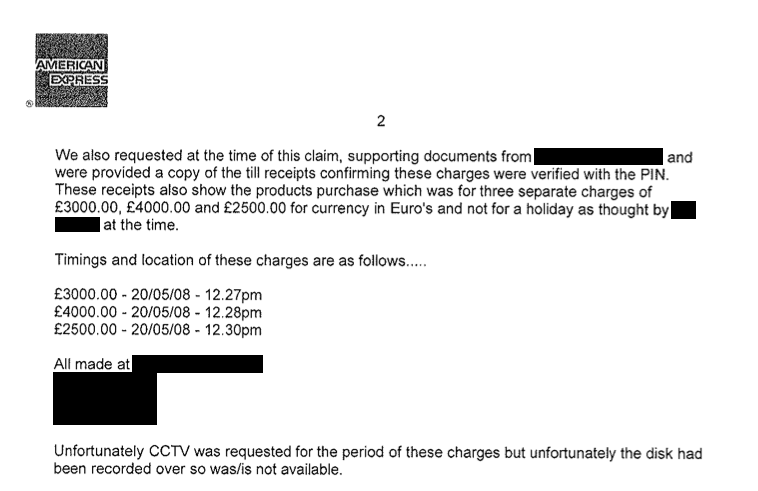
Unfortunately card issuers do precisely this, as shown in a recent dispute over £9,500 worth of point-of-sale transactions, between American Express and a customer. In their letter to the Financial Ombudsman Service, American Express presented the till receipt as the sole evidence that the PIN was correctly entered:

“We also requested at the time of this claim, supporting documents from [the merchant] and were provided a copy of the till receipts confirming these charges were verified with the PIN.”

Requests to American Express for the audit logs that include the CVR (card verification results), which would have shown whether or not the no-PIN attack had been used, were denied. The ombudsman nevertheless decided against the customer.

The issue of evidence in disputed transaction cases is complex, and wider than questions raised by just the no-PIN attack. To help bring some clarity, I wrote an article, “Reliability of Chip & PIN evidence in banking disputes”, for the 2009 issue of the Digital Evidence and Electronic Signature Law Review, a law journal. This article was written for a legal audience, but would also be suitable for other non-technical readers. It is now available online (PDF 221 kB).

In this article, I give an introduction to payment card security, both Chip & PIN and its predecessors. Then, it includes a high-level description of the EMV protocol which underlies Chip & PIN, with an emphasis on the evidence it generates. A summary of various payment card security vulnerabilities is given, and how their exploitation might be detected. Finally, I discuss methods for collecting and analyzing evidence, along with difficulties currently faced by customers disputing transactions.
Measuring Typosquatting Perpetrators and Funders

For more than a decade, aggressive website registrants have been engaged in ‘typosquatting’ — the intentional registration of misspellings of popular website addresses. Uses for the diverted traffic have evolved over time, ranging from hosting sexually-explicit content to phishing. Several countermeasures have been implemented, including outlawing the practice and developing policies for resolving disputes. Despite these efforts, typosquatting remains rife.

But just how prevalent is typosquatting today, and why is it so pervasive? Ben Edelman and I set out to answer these very questions. In Measuring the Perpetrators and Funders of Typosquatting (appearing at the Financial Cryptography conference), we estimate that at least 938,000 typosquatting domains target the top 3,264 .com sites, and we crawl more than 285,000 of these domains to analyze their revenue sources.
Continue reading Measuring Typosquatting Perpetrators and Funders

Chip and PIN is broken

There should be a 9-minute film on Newsnight tonight (10:30pm, BBC Two) showing some research by Steven Murdoch, Saar Drimer, Mike Bond and me. We demonstrate a middleperson attack on EMV which lets criminals use stolen chip and PIN cards without knowing the PIN.

Our technical paper Chip and PIN is Broken explains how. It has been causing quite a stir as it has circulated the banking industry privately for over 2 months, and it has been accepted for the IEEE Symposium on Security and Privacy, the top conference in computer security. (See also our FAQ and the press release.)

The flaw is that when you put a card into a terminal, a negotiation takes place about how the cardholder should be authenticated: using a PIN, using a signature or not at all. This particular subprotocol is not authenticated, so you can trick the card into thinking it’s doing a chip-and-signature transaction while the terminal thinks it’s chip-and-PIN. The upshot is that you can buy stuff using a stolen card and a PIN of 0000 (or anything you want). We did so, on camera, using various journalists’ cards. The transactions went through fine and the receipts say “Verified by PIN”.
Continue reading Chip and PIN is broken

New attacks on HMQV

Many people may still remember the debates a few years ago about the HMQV protocol, a modification of MQV with the primary aim of provable security. Various attacks were later discovered for the original HMQV. In the subsequent submission to the IEEE P1363 standards, the HMQV protocol has been revised to address the reported weaknesses.

However, the revised HMQV protocol is still vulnerable. In a paper that I presented at Financial Cryptography ’10, I described two new attacks. The first presents a counterexample to invalidate the basic authentication feature in the protocol. The second is generally applicable to other key exchange protocols, despite that many have formal security proofs.

The first attack is particularly concerning since the formal security proofs failed to detect this basic flaw. The HMQV protocol explicitly specifies that the Certificate Authority (CA) does not need to validate the public key except checking it is not zero. (This is one reason why HMQV claims to be more efficient than MQV). So, the protocol allows the CA to certify a small subgroup element as the user’s “public key”. Then, anyone who knows this “public key” can successfully pass authentication using HMQV (see the paper for details). Note, in this case, a private key doesn’t exit, but the authentication is successful. What is the “authentication” in HMQV based on?

The HMQV author acknowledges this attack, but states it has no bad effects. Although I disagree, this will be up to the reader to decide.

Updates:

  • 2010-03-11: Full version of the paper available here
  • 2010-04-04: My comments on Tang’s paper.

Why is 3-D Secure a single sign-on system?

Since the blog post on our paper Verified by Visa and MasterCard SecureCode: or, How Not to Design Authentication, there has been quite a bit of feedback, including media coverage. Generally, commenters have agreed with our conclusions, and there have been some informative contributions giving industry perspectives, including at Finextra.

One question which has appeared a few times is why we called 3-D Secure (3DS) a single sign-on (SSO) system. 3DS certainly wasn’t designed as a SSO system, but I think it meets the key requirement: it allows one party to authenticate another, without credentials (passwords, keys, etc…) being set up in advance. Just like other SSO systems like OpenID and Windows CardSpace, there is some trusted intermediary which both communication parties have a relationship with, who facilitates the authentication process.

For this reason, I think it is fair to classify 3DS as a special-purpose SSO system. Your card number acts as a pseudonym, and the protocol gives the merchant some assurance that the customer is the legitimate controller of that pseudonym. This is a very similar situation to OpenID, which provides the relying party assurance that the visitor is the legitimate controller of a particular URL. On top of this basic functionality, 3DS also gives the merchant assurance that the customer is able to pay for the goods, and provides a mechanism to transfer funds.

People are permitted to have multiple cards, but this does not prevent 3DS from being a SSO system. In fact, it is generally desirable, for privacy purposes, to allow users to have multiple pseudonyms. Existing SSO systems support this in various ways — OpenID lets you have multiple domain names, and Windows CardSpace uses clever cryptography. Another question which came up was whether 3DS was actually transaction authentication, because the issuer does get a description of the transaction. I would argue not, because the transaction description does not go to the customer, thus the protocol is vulnerable to a man-in-the-middle attack if the customer’s PC is compromised.

A separate point is whether it is useful to categorize 3DS as SSO. I would argue yes, because we can then compare 3DS to other SSO systems. For example, OpenID uses the domain name system to produce a hierarchical name space. In contrast, 3DS has a flat numerical namespace and additional intermediaries in the authentication process. Such architectural comparisons between deployed systems are very useful to future designers. In fact, the most significant result the paper presents is one from security-economics: 3DS is inferior in almost every way to the competition, yet succeeded because incentives were aligned. Specifically, the reward for implementing 3DS is the ability to push fraud costs onto someone else — the merchant to the issuer and the issuer to the customer.

Multichannel protocols against relay attacks

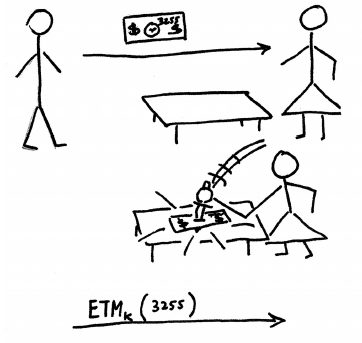
Until now it was widely believed that the only defense against relay attacks was distance bounding. In a paper presented today at Financial Cryptography 2010 we introduce a conceptually new approach for detecting and preventing relay attacks, using multichannel protocols.

We have been working on multichannel protocols since 2005. Different channels have different advantages and disadvantages and therefore one may build a better security protocol by combining different channels for different messages in the protocol trace. (For example a radio channel like Bluetooth has high bandwidth, low latency and good usability but leaves you in doubt as to whether the message really came from the announced sender; whereas a visual channel in which you acquire a barcode with a scanner or camera has low bandwidth and poorer usability but gives stronger assurance about where the message came from.)

In this new paper we apply the multichannel paradigm to the problem of countering relay attacks. We introduce a family of protocols in which at least one message is sent over a special “unrelayable” channel. The core idea is that one channel connects the verifier to the principal with whom she shares the prearranged secret K, while another channel (the unrelayable one) connects her to the prover who is actually in front of her; and the men in the middle, however much they relay, can’t get it right on both of these channels simultaneously.

We convey this idea with several stories. Don’t take them too literally but they let us illustrate and discuss all the key security points.

Don't let anyone else reuse this banknote!

This work is exciting for us because it opens up a new field. We look forward to other researchers following it up with implementations of unrelayable channels and with formal tools for the analysis of such protocols.

Frank Stajano, Ford-Long Wong, Bruce Christianson. Multichannel protocols to prevent relay attacks (preliminary; the final revised version of the full paper will be published in Springer LNCS)

How online card security fails

Online transactions with credit cards or debit cards are increasingly verified using the 3D Secure system, which is branded as “Verified by VISA” and “MasterCard SecureCode”. This is now the most widely-used single sign-on scheme ever, with over 200 million cardholders registered. It’s getting hard to shop online without being forced to use it.

In a paper I’m presenting today at Financial Cryptography, Steven Murdoch and I analyse 3D Secure. From the engineering point of view, it does just about everything wrong, and it’s becoming a fat target for phishing. So why did it succeed in the marketplace?

Quite simply, it has strong incentives for adoption. Merchants who use it push liability for fraud back to banks, who in turn push it on to cardholders. Properly designed single sign-on systems, like OpenID and InfoCard, can’t offer anything like this. So this is yet another case where security economics trumps security engineering, but in a predatory way that leaves cardholders less secure. We conclude with a suggestion on what bank regulators might do to fix the problem.

Update (2010-01-27): There has been some follow-up media coverage

Update (2010-01-28): The New Scientist also has the story, as has Ars Technica.

How hard can it be to measure phishing?

Last Friday I went to a workshop organised by the Oxford Internet Institute on “Mapping and Measuring Cybercrime“. The attendees represented many disciplines from lawyers, through ePolicy, to serving police officers and an ex Government minister. Much of the discussion related to the difficulty of saying precisely what is or is not “cybercrime“, and what might be meant by mapping or measuring it.

The position paper I submitted (one more of the extensive Moore/Clayton canon on phishing) took a step back (though of course we intend to be a step forward), in that it looked at the very rich datasets that we have for phishing and asked whether this meant that we could usefully map or measure that particular criminal speciality?

In practice, we believe, bias in the data and the bias of those who are interpret it means that considerable care is needed to understand what all the data actually means. We give an example from our own work of how failing to understand the bias meant that we initially misunderstood the data, and how various intentional distortions arise because of the self-interest of those who collect the data.

Extrapolating, this all means that getting better data on other types of cybercrime may not prove to be quite as useful as might initially be thought.

As ever, reading the whole paper (it’s only 4 sides!) is highly recommended, but to give a flavour of the problem we’re drawing attention to:

If a phishing gang host their webpages on a thousand fraudulent domains, using fifty stolen credit cards to purchase them from a dozen registrars, and then transfer money out of a hundred customer accounts leading to a monetary loss in six cases: is that a 1000 crimes, or 50, or 12, or 100 or 6 ?

The phishing website removal companies would say that there were 1000 incidents because they need to get 1000 domains suspended. The credit card companies would say there were 50 incidents because 50 cardholders ought to have money reimbursed. Equally they would have 12 registrars to “charge back” because they had accepted fraudulent registrations (there might have been any number of actual credit card money transfer events between 12 and 1000 depending whether the domains were purchased in bulk). The banks will doubtless see the criminality as 100 unauthorised transfers of money out of their customer accounts; but if they claw back almost all of the cash (because it remains within the mainstream banking system) then the six-monthly Financial Fraud Action UK (formerly APACS) report will merely include the monetary losses from the 6 successful thefts.

Clearly, what you count depends on who you are — but crucially, in a world where resources are deployed to meet measurement targets (and your job is at risk if you miss them), deciding what to measure will bias your decisions on what you actually do and hence how effective you are at defeating the criminals.

Relay attack featured on Dutch TV

Yesterday, the Dutch TV programme “Goudzoekers” featured Saar Drimer and me demonstrating a relay attack against the recently introduced Chip and PIN system in The Netherlands. The video can be found online, in both Windows Media or Silverlight formats as well as Flash below. The production team have published a synopsis (translated version) on their blog, and today there have been some follow-ups in the press, for example De Telegraaf (translated version).

Continue reading Relay attack featured on Dutch TV